
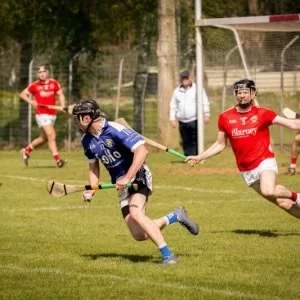
Every hurling coach wants players who can control the sliotar, strike accurately and make good decisions under pressure.
Developing those skills requires consistent practice and well-organised training sessions.
These 20 hurling drills can help coaches improve individual technique while building the teamwork needed for competitive matches.
Adapt each drill to the age, experience and ability of your players.
First Touch and Ball Control
1. First Touch Gates
Set up pairs of cones five metres apart. Players receive a ground pass and control the sliotar through a gate before returning it.
Focus on body position and directing the first touch into space.
2. Wall Ball Challenge
Players strike a sliotar against a suitable wall and control the rebound.
Begin with comfortable distances and progress to alternating sides and controlled movement.
3. Ground Control Circuit
Set up several stations where players move a sliotar around cones using controlled touches.
Focus on keeping the sliotar within playing distance.
4. First Touch Under Pressure
A player receives a pass while a defender applies controlled pressure.
The receiving player must control the sliotar and move into space.
5. Reaction Control
The coach delivers the sliotar from different angles. Players react, adjust their feet and attempt a controlled first touch.
Striking and Passing
6. Short Striking Pairs
Players strike the sliotar between partners over a manageable distance.
Emphasise accuracy before increasing speed.
7. Long Striking Accuracy
Set up target zones at different distances. Players attempt to land the sliotar inside each zone.
8. Moving Strike Drill
Players receive the sliotar while moving and strike toward a teammate.
Focus on balance and timing.
9. Striking Through Gates
Players aim strikes through designated cone gates.
Adjust gate width to increase difficulty.
10. Passing Under Pressure
Three attackers attempt to maintain possession against two defenders in a marked area.
Encourage quick decisions and movement after passing.
Catching and Aerial Skills
11. High Catch Practice
Players practise catching appropriately delivered high balls in pairs.
Introduce opposition gradually.
12. Moving Catch
Players run into space and attempt to catch a delivered sliotar.
Focus on tracking the flight and adjusting position.
13. Catch and Release
After receiving the sliotar, players must deliver a pass quickly.
This encourages efficient transitions.
Defending and Tackling
14. One-on-One Channel
An attacker attempts to move through a narrow channel while a defender works on positioning and controlled pressure.
15. Interception Drill
Defenders read passing lanes and attempt to intercept deliveries.
16. Defensive Recovery
An attacker begins with an advantage while a defender recovers from behind.
Focus on positioning and disciplined defending.
Match Situations
17. Three-on-Two Attack
Three attackers attempt to create a scoring opportunity against two defenders.
18. Transition Game
Two teams play a small-sided game where possession changes trigger an immediate counterattack.
19. Conditioned Possession Match
Players must complete a specified passing action before attempting a score.
Adjust the condition to match your coaching objective.
20. Final-Third Decision Game
Attackers receive possession in scoring positions and decide whether to shoot, carry or pass.
Focus on selecting the best option.
How to Structure a Hurling Training Session
A 75-minute session could include:
- 10 minutes of warm-up and basic ball control.
- 15 minutes of first-touch work.
- 15 minutes of striking and passing.
- 15 minutes of defensive or attacking situations.
- 15 minutes of conditioned games.
- 5 minutes of review.
Use appropriate helmets and protective equipment, maintain safe spacing during striking drills and follow applicable GAA safety guidance.
Track Your Hurling Team’s Development With Strive
Good coaching involves planning, consistency and reviewing progress.
Strive Team App helps hurling coaches track training attendance, monitor individual training activity and organise communication.
You can spend less time managing records and more time coaching your players.
Start your 14-day free trial at Strive Team App.